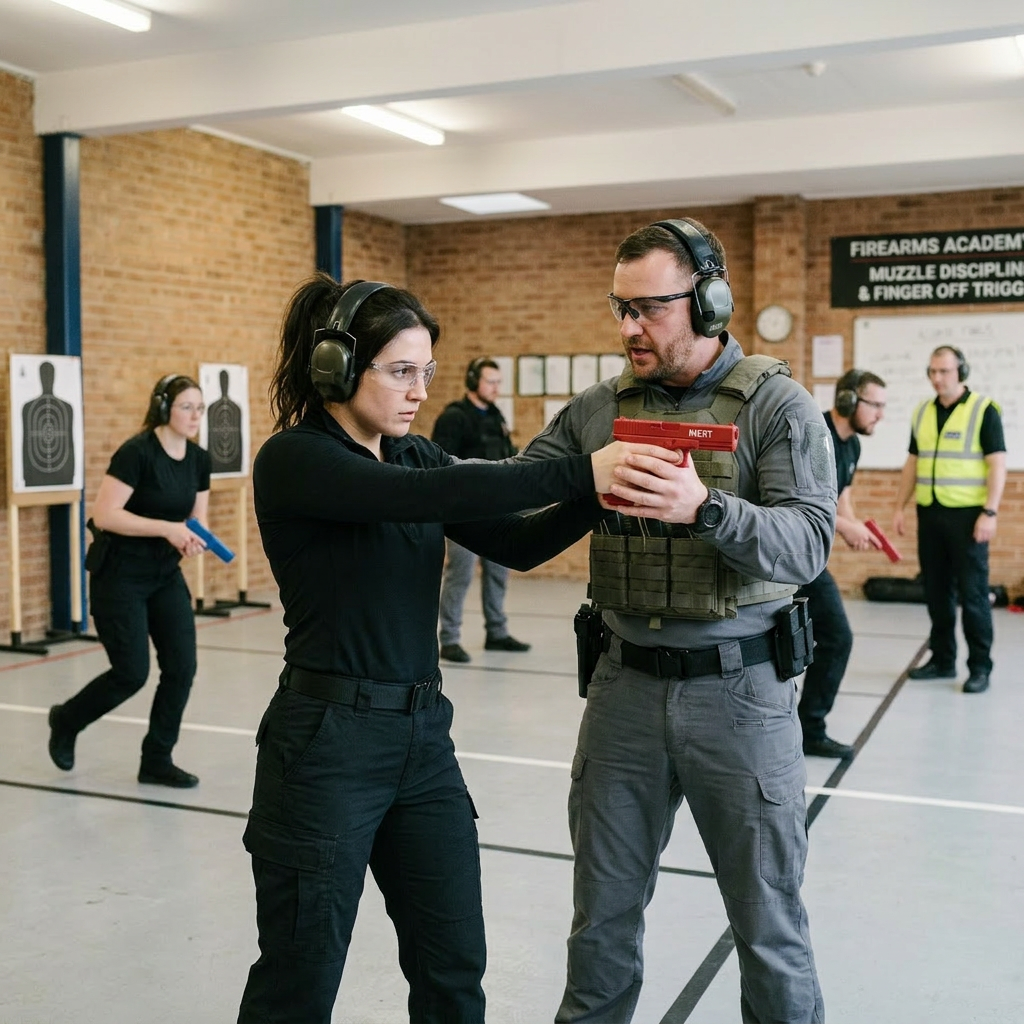
Photo Credit: Matry X Consulting
The Run, Hide, Fight method was developed by the Department of Homeland Security in response to active shooter incidents (ASI) and providing a solution to survive the horrific incidents.
In this post, I’ll be explaining how the Run, Hide, Fight method has been mis-applied as well as the proper way to apply it during an active shooter incident.
Disclaimer: My goal here isn’t to provide solutions to preventing active shooter incidents. I’ve already done that in a previous post. Instead, my goal is to re-define and explain each part of Run, Hide, Fight so that if you find yourself in a situation where you may need to utilize either one or a combination of the method to survive.
To best explain the method, I’m going to change the terms Run, Hide and Fight to Escape, Barricade and Defend because I believe these terms define and explain the Run, Hide, Fight method the best due to the information that I gained when I attended an active shooter prevention seminar that was taught by Dave Young at the 2023 USCCA Expo. The points that were made caused me to re-examine my own stance slightly. The more I contemplated the presentation, the more of what was stated made sense.
With that said, I’ll be providing some of the points that I’ve picked up to better explain each part.
Escape
Your main objective should be to escape the area – whether through an exit, window or some other means – and get to a safe location so that you can notify emergency services. This doesn’t necessarily mean that you won’t get hurt. More than likely, you could get injured by getting shot or trip and fall as you’re running, for example. If you’re shot, stick your thumb in the wound and twist because you need to control the bleeding. If it hurts, it works!
Once you hear gun shots, seek cover for 15 – 30 seconds and “trust your eyes but question your ears” as Clint Emerson would say. As you attempt to escape, you’ll need to stay low, out of sight and move diagonally. Develop a mindset of “I’m up, he/she sees me. I’m down.” This all begins by developing your situational awareness – observing where exits are, forms of cover and concealment, body behavior such as someone with their hand in a bag for long periods, and so on.

Barricade
So, why change the word from hide to barricade? Well – unless things have been improved since I was in high school – as active shooter drills would be conducted, instead of practicing by barricading the doors, we would hide in a side office within the classroom and the teacher would place a laminated card with one side being green (signifying that everyone was safe) and the other side being red for requiring immediate assistance under the door to the hallway for law enforcement before moving to the office to hide with everyone else. This is about as effective as hiding under a desk if a nuclear bomb is dropped or placing a hardcover book over your head while leaving your back exposed when a tornado strikes. Not to mention, the likelihood of the threat “having a connection to their target site” and, therefore, potentially knowing that system is approximately 48% [FBI].
Instead of only hiding, utilize furniture to hold the door shut (ex: lining tables up between the door and opposing wall) and/or install FLIPLOK on the doors. Hiding without barricading can and has led to tragic results!

Defend
This is where I tend to get the most pushback because of what you might have to do if you’re in an active shooter situation. If you find yourself in an active shooter situation and your only option of survival is to defend yourself or the group that you’re with, you’re going to need to “fight like you’re that third monkey trying to get on the Ark” (I believe my USCCA representative got that quote from Tim Kennedy but, regardless, you need to fight like hell and fight to survive) whether you utilize a firearm, knife or improvised weapon, or you’re by yourself or with a group.
The criteria for utilizing weapons include the distance between you and the threat, effort (i.e. solo or team), and the goal. Here are some points to hopefully help you understand where I’m coming from if you need to defend yourself:
- Hairspray and lighter.
- Pouring lighter fluid on the floor by the door and light it on fire when the threat walks in.
- Put super glue on a quarter and place in between the door, or put super glue in the door entry strike.
- Stand at the height of the door knob. When the threat enters, take control of the muzzle and push up in a 45 degree angle and then take the shot if you have a handgun.
- If you’re able to team up with another individual, have them grab the firearm while you attack the threat with an improvised weapon (ex: fire extinguisher, flower vase, chair, pen to the neck, etc) or vice versa once the threat enters the room.

Conclusion
Overall, you have to be an active participant to save a life – yours as well as potentially others. This begins with being a “when then”, not an “if then” thinker as you shouldn’t use logical thinking in tactical thinking situations. It doesn’t work! Gordan Graham says it best by stating “If you can predict it, you can prevent it” as there’s an 80 – 100% chance of survival if the shooter stays outside.
My goal isn’t to cause fear or for you to worry (ex: Luke 12:22-26) but, instead, to get you in the mindset of properly preparing for the worst-case scenario (ex: Genesis 6:1-8:14). Simply hiding and praying that you stay safe without taking the necessary action isn’t a viable strategy.
With that said, begin your training today! Don’t wait until after an active shooter situation happens because you may not have an opportunity. Sign up for a self-defense, First Aid/CPR/AED and/or an active shooter prevention program. Not available to take a class with us or agree/disagree with what’s been said, feel free to reach out to us via Minnect or Smeeple.